
Bryan City Directory Collections: Shelves, Scans, and Gaps
The documented local starting point is a surviving Bryan and College Station run back to 1937 at Carnegie and Texas A&M. Those volumes are arranged by personal name and street address and can include an address, telephone, spouse or household clue, and occupation. The available evidence does not establish a complete local publisher-by-year list, so each edition should be checked for its own coverage and inclusion rules.
| Collection | Years | Where Held | Access |
|---|---|---|---|
| Bryan and College Station directories | Surviving local run back to 1937 | Carnegie History Center and Texas A&M | Name and street sections; inspect each edition's scope. |
| Texas city-directory scans | Varies by repository and edition | University of North Texas portal and repository copies | Searchable scans and indexes; complete Bryan edition coverage is not established on the inspected landing page. |
| Reverse or criss-cross leads | Exact Bryan run not located | Carnegie and Texas A&M research lead | Ask the repository to confirm title and year before relying on an address section. |
| Telephone directories | Scattered local leads back to the 1920s | Carnegie and Texas A&M holdings | Surname, address, and telephone clues; household coverage is incomplete. |
For earlier county context, the Texas State Library and Archives Commission lists deed records from 1841 to 1886 with indexes from 1841 to 1899, plus marriage records from 1844 to 1907. Those are different records, not substitute directory editions, but they can help test a name or place when the shelf has a gap.
The Bryan City Directory Shelf at Carnegie History Center
Begin with the Carnegie History Center listing from the Bryan-College Station Library System, which places the center at 111 S Main St, Bryan, TX 77803, phone 979-209-5630. Weekday hours are listed as 10 a.m. to 5 p.m. Carnegie holds local archives, artifacts, historic material, and a genealogy collection, with special-collections and digitization paths linked from the library system.
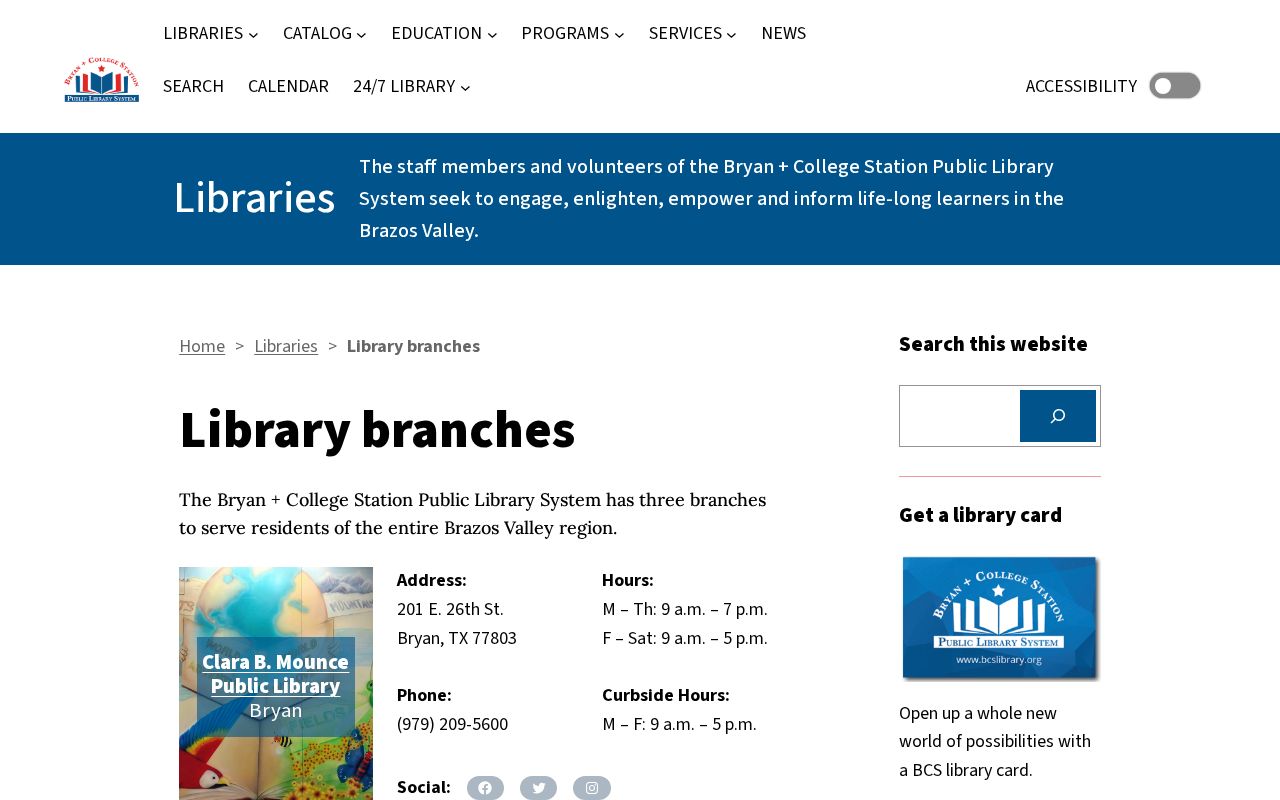
The building opened in 1903 through a $10,000 Carnegie grant and remains in its original library purpose. That continuity makes it more than an address: it is a practical gateway to directories, newspapers, artifacts, and staff guidance. Confirm item availability, reproduction terms, and any appointment requirement before making a special trip.
Reading a Bryan City Directory Entry
A volume may organize people by name and also offer an address-oriented section. Read the whole line, its section heading, and the edition's front matter before extracting a conclusion. The local guide says the surviving Bryan and College Station editions can provide the following kinds of clues, but no one field should be assumed to appear in every year.
| Name | Spelling, initials, and the order used by that edition; compare variants in later records. |
|---|---|
| Street address | A historical location clue that may lead to the street section or a map, not a guarantee of a current address. |
| Telephone | A number when printed; older telephone books can be useful companions, though not every household had service. |
| Spouse or household clue | A relationship hint when printed, useful for separating similar names but needing a second source. |
| Occupation | A time-stamped activity clue when printed; keep the edition year attached to it. |
| Tenure indication | Some directory traditions include a mark or note; use only the edition's own key, not a meaning borrowed from another volume. |
- Criss-cross section
- An address-order directory section that can lead from a street location to listed names. The exact Bryan series and year run need repository confirmation.
- Householder index
- A name-oriented arrangement intended to help locate a household entry. Its inclusion and definitions vary by volume.
- Abbreviation key
- The publisher's explanation of marks and shortened terms, usually near the front of a volume. Photograph or note it before interpreting a line.
Bryan City Directories in the UNT Collection
Use the University of North Texas Texas City Directories collection as a search route for digitized scans. It can surface searchable directory material, indexes, advertisements, resident listings, and business listings. The inspected collection page does not supply one complete Bryan publisher or year list, so a search result must be evaluated by its displayed edition, repository, and image sequence.
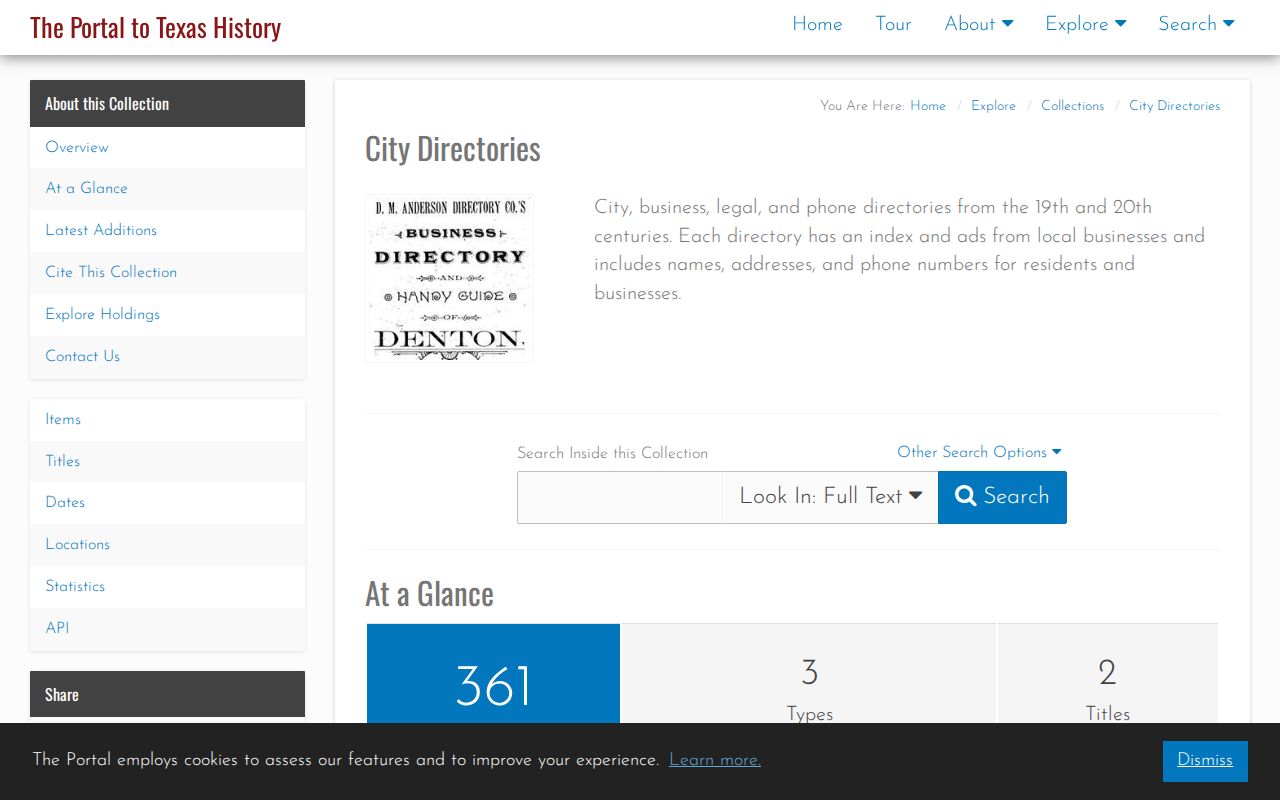
A digital result can make a name easy to find, but the scan still needs a source citation. Save the collection name, item title, year shown on the volume, page or image number, and the access date. If a search finds nothing, log the exact edition checked instead of treating the absence as a conclusion about the person.
Companion Sources for a Bryan Directory Search
Telephone books, newspapers, maps, institutional lists, and cemetery material answer different parts of the same question. Carnegie holds the Bryan-College Station Eagle under changing titles with limited indexes, while The Battalion is available on microfilm at Evans Library and Cushing has Texas A&M clippings. Cushing staff directories are a separate institutional source and should not be treated as a citywide household list.
For a historical household, newspapers may add a birth, marriage, death, land sale, club, school, or church notice. Sanborn maps can date a building footprint, material, or use, but normally do not name an owner or occupant. A cemetery marker, plot card, sexton ledger, or obituary may anchor a date and place, yet does not itself establish a final civil address.
A Bryan City Directory Timeline for Date Checks
Use Bryan's recordkeeping history as a set of date pegs around a directory entry. Brazos County was organized in 1843, Bryan became county seat in 1866, the city was incorporated in 1871, and the Bryan 150 timeline places the first A&M-Bryan telephone connection in 1883. The documented local directory run begins much later, back to 1937, so it should not be projected backward over the earlier civic history.
| 1841 | Brazos deed records begin, providing an early county property trail. |
|---|---|
| 1866 | Bryan becomes the county seat, an important place-reference check for county records. |
| 1903 | The Carnegie building opens through its $10,000 grant. |
| 1937 | Surviving local Bryan and College Station directory holdings are documented back to this point. |
These dates narrow a search rather than prove a connection. A listing near the 1883 telephone milestone, for example, can be checked against newspapers, maps, and Cushing material, but no undated claim should be converted into a family relationship.
Cushing, TSLAC, and the Bryan City Records Lead
Texas A&M's Cushing Memorial Library and Archives is a major discovery route for community histories, maps, oral histories, A&M materials, and finding aids. Contact Public Services before visiting, particularly for unprocessed or restricted material. Its Bryan City Records finding aid identifies collection TxAM-CRS 536 as 59 ledgers that are partially processed. That is a municipal-history lead, not evidence of a searchable online name index.
The Texas State Library and Archives Commission supplies reel-level Brazos coverage that can help bridge local questions: deeds, marriage records, naturalization, court records, probate, tax rolls, and inquests all have separate dates and gaps. Record the volume, reel, page or image, filing date, and spelling used before joining it to a directory line.
Trace a Household Through Bryan City Directories
Following one household works best as a comparison exercise, not a shortcut. Begin with the first clearly identified listing and follow the name, spelling variants, address, and printed household clues forward. Pair dated editions with census years and independent local records so a move, death, or absence is not inferred from one missing line.
- Start with the earliest confirmed entry and cite its edition year and page or image.
- Follow the surname and initials through later available volumes, recording every address change rather than assuming continuity.
- Ask whether an address-order or criss-cross section exists for that edition before using it to identify nearby listed names.
- Compare the directory decade with the appropriate census, deed, probate, or cemetery evidence.
- Use an obituary, newspaper notice, or archive reference to test why a name appears, changes, or disappears.
A disappearance can reflect a move, death, changed spelling, incomplete inclusion, missing edition, or a simple indexing problem. Preserve negative results with the exact volume and section checked. Two independent anchors, such as a dated directory address plus a deed or cemetery record, are stronger than a name match alone.
Keep Bryan City Directory Clues in Local Context
The Brazos Historical Commission supplies county-origin and marker context that can help place an older listing in the correct period. Bryan's historical material also identifies Freedman Town and Hall's Addition, Downtown, Eastside, North Oakwood, early immigrant communities, and other local settings. A community name is a research lead, never a conclusion about a specific person's identity.
For a place reference, record the source year and check a current GIS or dated historic map before carrying the label forward. Historic maps and photographs can show a prior alignment or land use, but map placement is not a legal boundary and does not identify an occupant by itself.
Save the Evidence Behind a Bryan Directory Find
A reliable research note separates what a record says from what the researcher infers. For each entry, retain the repository, collection or edition, publisher if shown, page or image, access date, name spelling, address as printed, and any uncertainty. Add a second source only after checking that its date and role fit the same person.
Research note. A directory entry is historical evidence for the edition year; use a dated second source before treating it as a household, location, or relationship conclusion.